Home  /  Contract cleanroom space

Class 10,000 cleanroom space in Irvine, California.

More than 2,000 sq. ft. of dedicated medical-device cleanroom space — benches or a private room within an ISO 13485 facility. Staffed by our device assembly technicians or your own team, supporting programs from prototype through production. Flexible availability — short-term for a defined build, or long-term as ongoing production capacity.
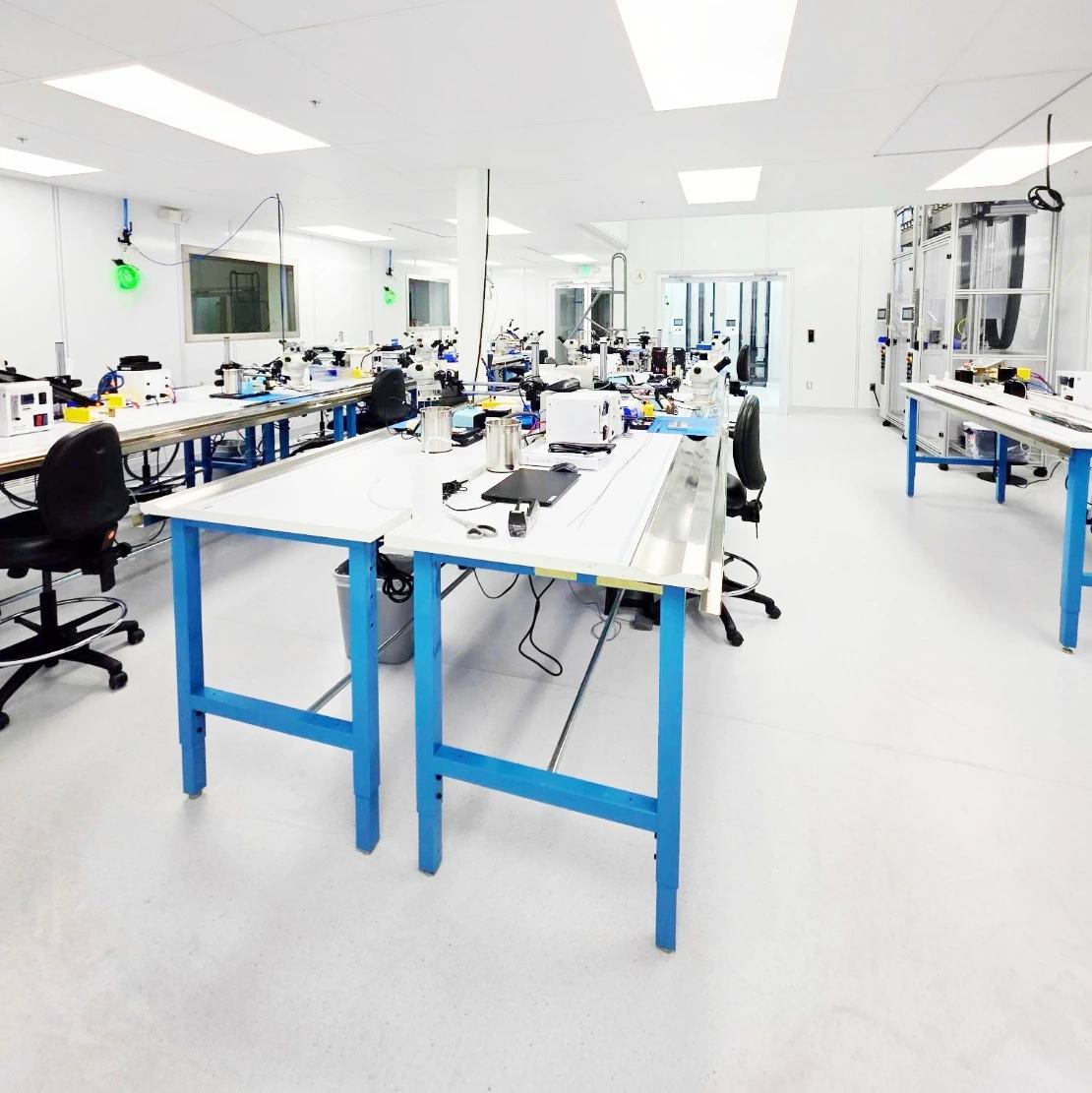
Open bench space inside the MedTech Innovation, LLC Class 10,000 cleanroom in Irvine, California
Space
Benches or roomsDedicated, or a complete private room
Entry point
SubassemblyThrough to full clinical build
Availability
FlexibleShort-term or long-term
Site access
ScheduledBadged, escorted, under NDA
Why rent instead of build

Subassembly builds start in weeks.

Most engagements begin with a single subassembly: the step consuming bench hours or gating downstream work. Qualified space, trained technicians and process equipment are already in place, so build start is measured in weeks.

Immediate capacity. Braiding, hydrophilic coating, lamination and reflow, adhesive dispensing and bonding equipment are installed and in production use. Components shipped in advance are received, logged and staged, so assembly begins on arrival.

Concurrent execution. Long-lead subassemblies are built while the full device remains in design iteration, converting sequential schedule into parallel schedule ahead of design freeze.

Capacity relief. Labor-intensive subassembly steps move off site, reserving your own classified space for final assembly, test and release — typically faster to realize than adding and staffing benches internally.

Risk reduction. Yield, process window and work instructions are established on the isolated subassembly, before the step is integrated into a finished device where rework cost is materially higher.

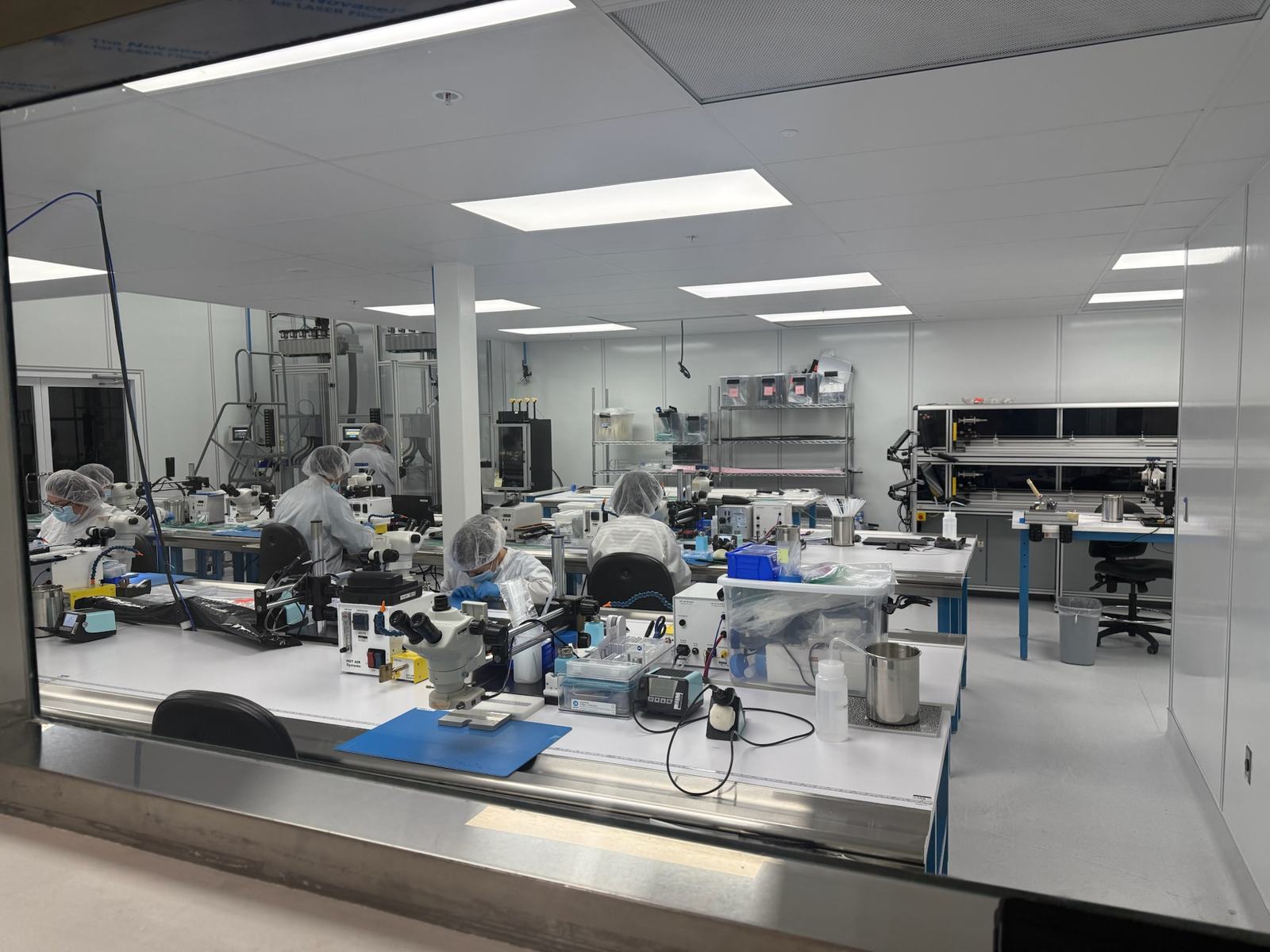
Gowned technicians assembling catheter subassemblies at microscope stations on the Class 10,000 cleanroom floor
Subassembly work, in progress on the shared floor
Start here

Subassemblies in production

Built to your drawings and acceptance criteria, packaged and sealed on site, shipped for final assembly or retained for integration into a later build.

  • Braided shaft cores and reinforcement structures
  • Tip subassemblies and distal transitions
  • Marker band placement and bonded joints
  • Hub, luer and strain relief bonding
  • Balloon bonding and inflation lumen joints
  • Hydrophilic coated shafts and coated components
  • Pouch-sealed, seal-verified component kits
The alternative

Build-out cost, for comparison

The capital and schedule required before a first unit is assembled in your own qualified space.

  • A landlord, a lease and a build-out contractor
  • HVAC, filtration and pressure cascade design
  • A validation consultant and a certification cycle
  • An equipment budget, before you know what you need
  • Hiring and training technicians for work not yet proven
  • Twelve to eighteen months to first assembled unit

Contract space converts this to an operating cost matched to program duration, with no idle capacity or depreciating equipment between builds.

What you can take

Dedicated benches or a private room.

Two configurations. Programs commonly begin with benches and transition to a private room as headcount or confidentiality requirements increase.

Option 1

Dedicated benches

Individual Class 10,000 benches on the shared floor, assigned to your program for the duration of the engagement.

  • Assigned, not shared or rotating
  • Shared access to on-site process equipment
  • Scale bench count up or down at renewal
  • Suited to small teams and initial builds
Option 2

A complete private room

A dedicated classified room for a single program. Your process, equipment layout and materials, physically separated.

  • Separate room within the classified envelope
  • Room to lay out your own fixturing and equipment
  • Physical separation for confidentiality and audit
  • Suited to larger builds and extended programs
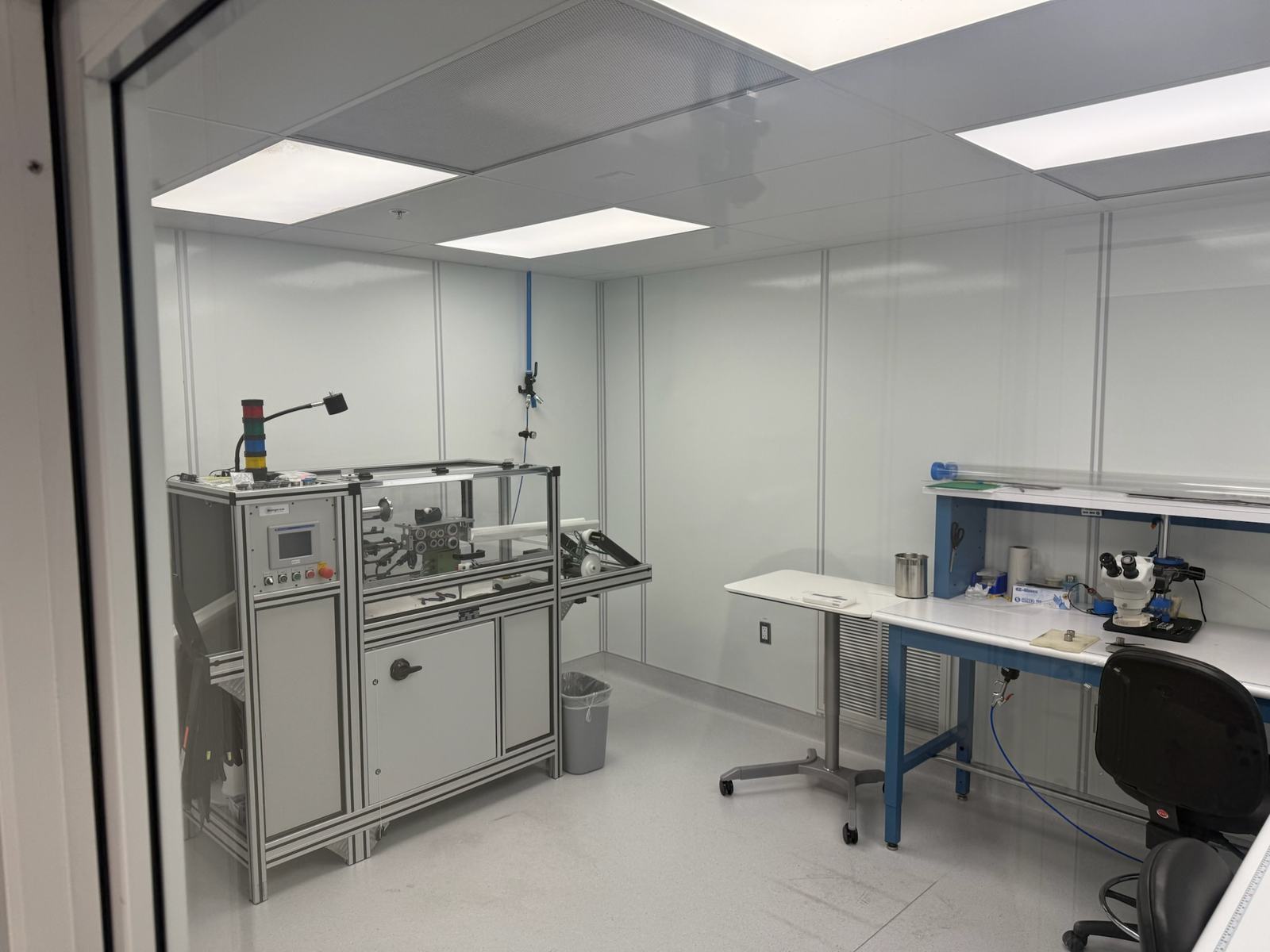
Process equipment and an ESD bench with stereo microscope inside a private cleanroom
Private room — equipment and bench
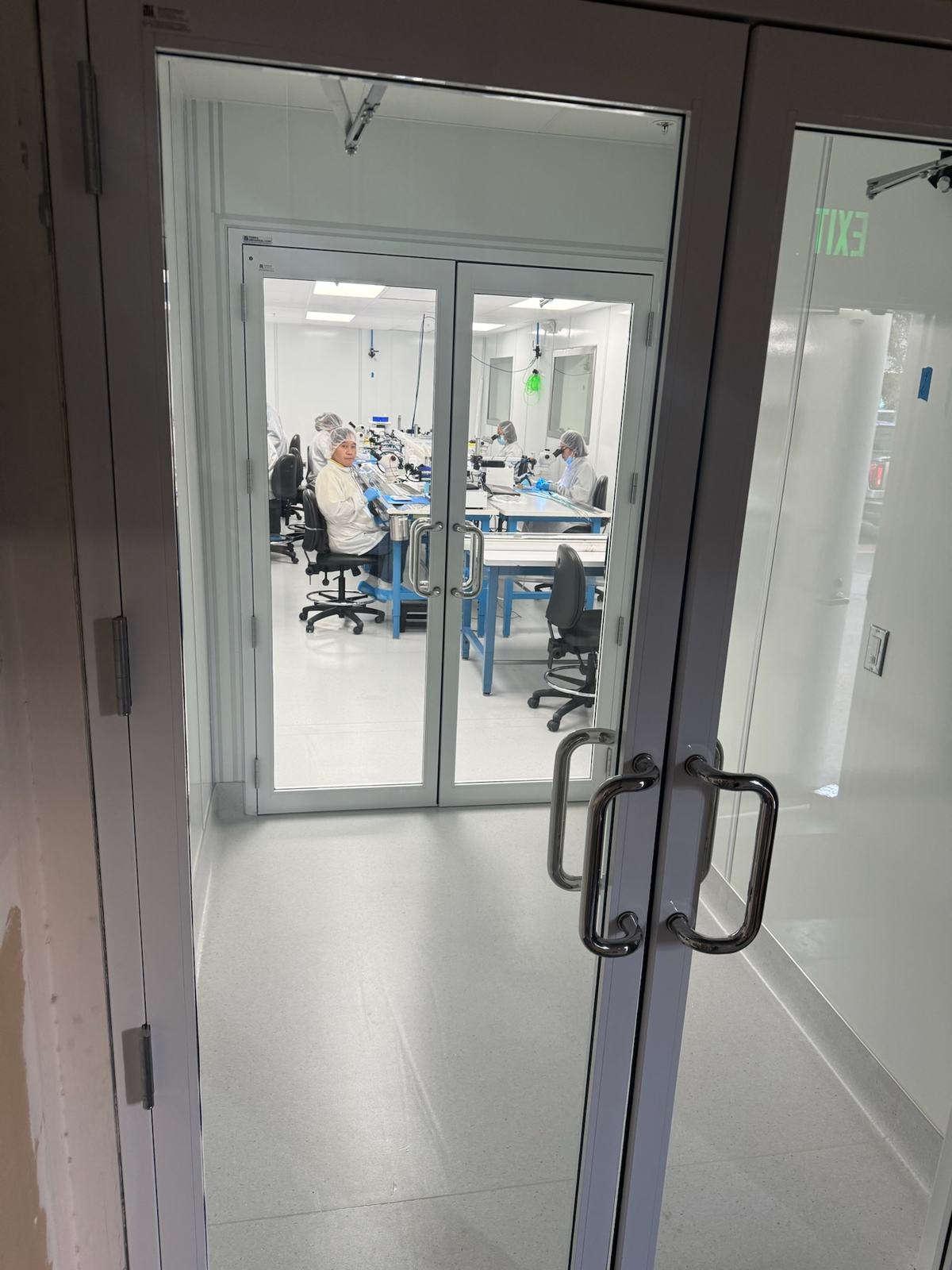
Interlocked cleanroom doors looking onto the shared assembly floor
Shared floor — dedicated benches

How long you keep it

Flexible availability: short-term and long-term.

The same space serves two distinct requirements, scoped and priced differently. Identifying which applies determines space configuration, staffing model and commitment structure.

Short term

Defined-duration builds

Scoped work with a defined completion date. Renewable if the schedule extends.

  • A V&V or clinical build with a fixed quantity
  • Overflow when your own room is full
  • Cover while your cleanroom is under recertification or build-out
  • A pilot run before you commit capital to your own space
  • A coating or process trial that needs classified space for a few weeks
Long term

Ongoing production capacity

Continuing arrangements for programs in sustained production. Consistent space and consistent technicians for the duration.

  • Production capacity without classified space as a capital asset
  • A dedicated private room that stays yours between builds
  • Consistent technicians who already know your process
  • Expansion space to grow into as volumes rise
  • No lease, build-out or recertification cycle to manage

Most engagements begin short-term and extend once the arrangement is proven on an initial build.

Two ways to staff it

Staffing: our technicians or yours.

Staffing model drives both cost and start date. It is not fixed for the engagement — programs commonly begin with our technicians and transition as internal headcount is hired.

Option A

Our assembly team

Trained device assembly technicians already qualified to this facility and its procedures. No recruitment, relocation or training lead time, and no retained headcount after build completion.

  • Qualified on catheter assembly, bonding, coating and packaging
  • Working under our ISO 13485 quality system
  • Senior engineering supervision available on your program
  • Technician count scaled to build schedule
Option B

Your own team

Your technicians and engineers work the benches. Process knowledge and records remain in house. We provide the classified environment, equipment, utilities and facility onboarding.

  • Gowning and facility procedure training before floor access
  • Office desk space on site for your engineers
  • Badged access during scheduled operating hours
  • Combined model available during transition

Included with the space

Shared equipment comes with the bench.

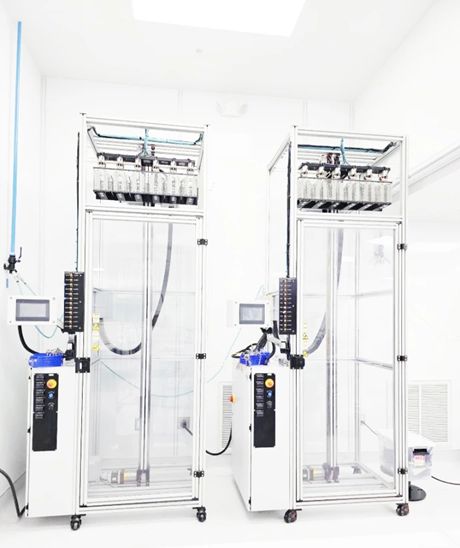
Two automated hydrophilic coating systems, a lamination and reflow oven, and a batch oven. An automated braider. LaserLinc laser micrometry. UV curing stations, EFD dispensers, 6× microscopes, batch oven, ultrasonic cleaner, pouch sealer, seal peel and leak testers, and clean dry compressed air at every bench.

Plus adjacent warehouse and material storage, advance shipping and receiving, and desk space on site. If your process needs something not on the list, we will source it or tell you to bring it — before you sign, not after.

Full resource list, with what is not here →

Facility overview — engineering, R&D and technical resources →

Two automated hydrophilic dip-coating systems in the cleanroom
Automated coating systems, on site

Read the class number carefully

Class 10,000 is cleaner than Class 100,000. The smaller number wins.

Cleanroom classes are counted by how many particles are allowed, so a lower number is a cleaner room. Under ISO 14644-1, an ISO 7 room permits roughly ten times fewer airborne particles than an ISO 8 room. Many contract facilities in this region run ISO 8. Ours runs ISO 7.

This facility — ISO 7

352,000

particles ≥0.5 µm permitted
per cubic meter of air

Also written Class 10,000. Gowned entry, transfer airlock, filtered positive-pressure downflow.

ISO 8, for comparison

3,520,000

particles ≥0.5 µm permitted
per cubic meter of air

Also written Class 100,000. A full class less clean — ten times the permitted particle count.

Limits per ISO 14644-1. If your process is particle-sensitive — open lumens, adhesive bond joints, coated surfaces, sterile barrier packaging — this is the specification that decides where the build should happen, and it is worth checking on every quote you compare.

How it starts

Engagement sequence.

Every engagement follows the same sequence from scoping through first assembly.

Before you arrive

Scoping, resource review and NDA

Your process flow is reviewed against on-site capability and any customer-supplied requirements are identified. NDA executed before drawings are exchanged. Written quotation issued with availability and term.

Before you arrive

Advance material shipment

Components, fixturing and equipment shipped ahead of start date are received, documented against incoming criteria and staged in secured storage.

Day one, AM

Facility onboarding and gowning training

Entry procedure, gowning, transfer airlock protocol, material handling, waste and egress. Training is completed and recorded before floor access is granted.

Day one, PM

Bench assignment and equipment verification

Benches assigned, materials transferred through the airlock, shared equipment verified against process requirements. Office space assigned.

Day two

Assembly start

Build commences with senior engineering support available on the program.

At term end

Extension, expansion or close-out

Term extended, capacity increased, or finished goods shipped to your test lab, sterilizer or clinical site. Materials and build records returned on close-out.

Before you ask

Common questions.

What is current availability and lead time to start?

Availability varies by month. Submit required dates and bench count for a written response with current availability. Lead time to build start is typically measured in weeks.

Can you build a single subassembly?

Yes. This is the most common entry point. Provide drawings and acceptance criteria for the process step in question — braided shaft core, tip subassembly, bonded hub, coated shaft. The subassembly is built to your documentation, packaged and sealed on site, and shipped for final assembly.

Benches or a private room?

Benches suit small teams, initial builds and defined V&V quantities. A private room suits programs requiring a custom equipment layout, extended duration or physical separation for confidentiality. Provide process and headcount and we will recommend the appropriate configuration.

Who runs the build, and who owns the records?

Determined by staffing model. Where your team staffs the benches, you retain the process and the records. Where our technicians run the build, work is performed under our ISO 13485 quality system and records are delivered with the product. The device master record and design history remain your property in both cases.

What happens to our IP and our materials?

An NDA is executed before drawings or device details are exchanged; we can issue ours or execute yours. Materials are held in secured storage assigned to your program. A private room provides physical separation in addition to contractual protection.

Can we bring our own equipment in?

Yes. Equipment enters through the transfer airlock under the same protocol as any other material: removed from shipping packaging, wiped down and passed through. Submit an equipment list in advance so power, compressed air and bench footprint can be confirmed.

What if we need more space, or more time?

Terms are renewable without limit, and additional classified space is available as the program scales — a successful pilot does not require vendor change and requalification.

Is long-term capacity available as an alternative to building?

Yes. A renewing arrangement retains the same space and the same qualified technicians without classified space as a capital asset, a build-out to manage or a recertification cycle to own. Most such arrangements begin as a short-term engagement and extend once proven.

Can we audit the facility before committing?

Yes. Facility tours and quality audits are scheduled in advance and conducted under NDA, and include floor walkthrough, quality system review and access to the technicians assigned to the work.

Availability inquiry

Submit dates and bench count.

Scoped inquiries receive a written response with current availability, quotation and any customer-supplied requirements. Indicate if the schedule is time-critical.

+1 949-336-2972 [email protected]

17151 Gillette Ave, Irvine, CA — 8 minutes from John Wayne Airport
Mon–Fri, 8:00 AM – 4:30 PM PT

Fields marked (required) are required.

Submit your inquiry and our team will respond by the next business day with availability.