Home  /  Design & development process

Five-phase gated development program.

Concept through clinical build under an ISO 13485 quality system. Each phase carries defined deliverables and a stated exit condition at its milestone.

Entry at any phase. Most programs join at Phase 3 or 4.

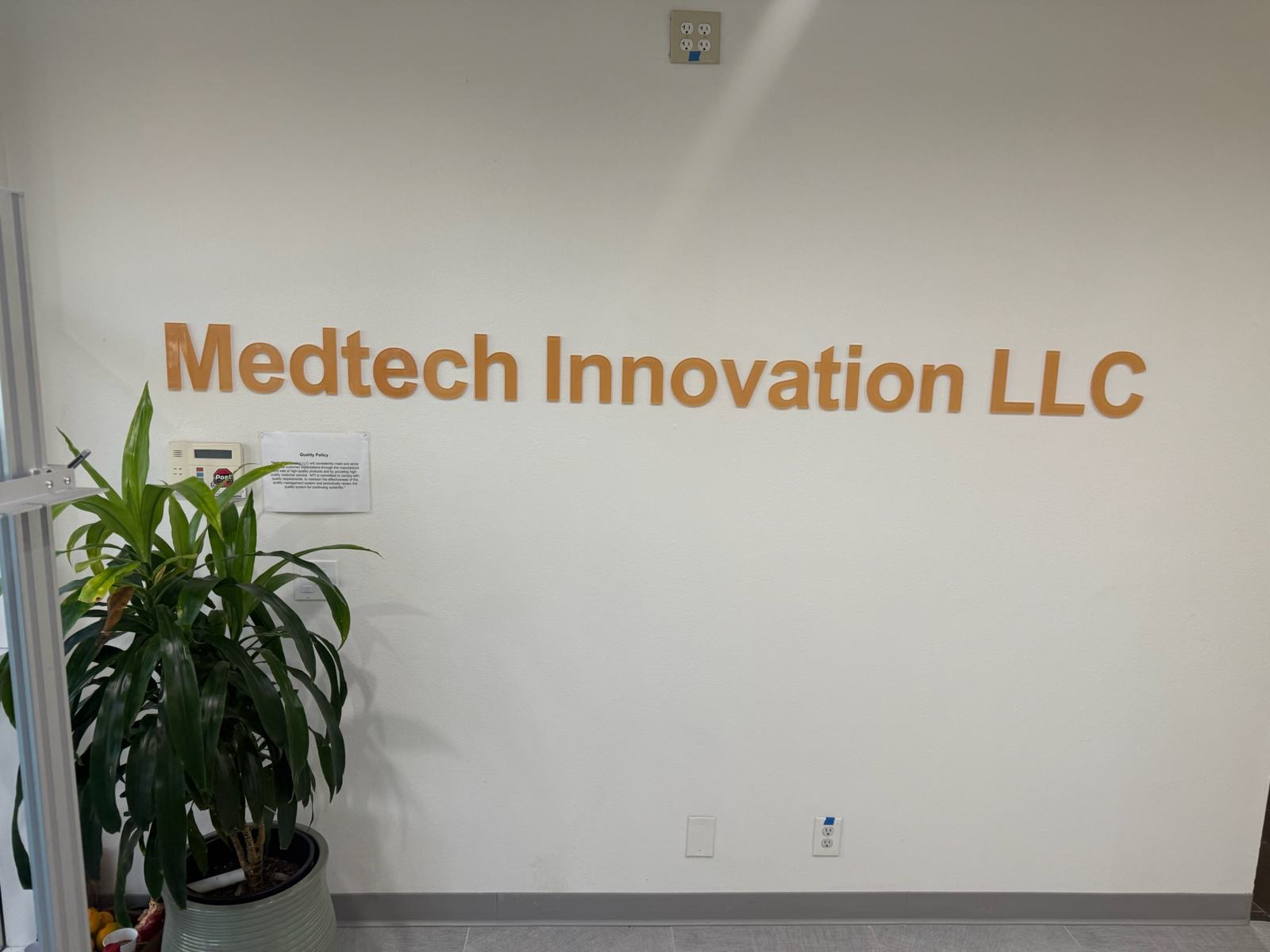
MedTech Innovation lobby wall with the company name and posted quality policy

Why gated

Gates are decision points with defined exit criteria.

Each gate specifies a named outcome and the condition that must be satisfied to pass it, followed by a decision to fund the next phase, repeat an iteration, or stop.

Program status resolves to a defined position — preliminary design freeze passed, V&V build in progress — which is reportable to a board or investor without qualification.

Where a phase does not meet its exit criteria, that is identified at the gate rather than accumulating as unreported schedule risk.

What every phase gives you

A named deliverable set

Documents and hardware, listed before the phase starts.

A milestone with a definition

A stated condition, met or not met, rather than a calendar date.

A decision point

Fund the next phase, repeat an iteration, or stop.

Assigned senior engineering

The same engineer through the phase, contactable directly.

The program

Phase detail.

Deliverables, key tasks and exit gate for each phase. Duration is scoped per program, driven by device complexity and required iteration count.

PHASE01

Architecture development

Before anything gets built, we establish what the device has to do, what is technically uncertain, and which conceptual configurations are worth prototyping. The output is a chosen architecture, not a pile of options.

Deliverables

  • Project plan
  • Technical feasibility analysis
  • Draft design inputs, requirements and design elements
  • Design plan
  • Preliminary conceptual design
  • Regulatory assessment

Key tasks

  • Define design inputs, design elements and the design plan for the system
  • Determine the critical technical questions — the things that could sink the program
  • Generate conceptual design configurations
  • Assess the regulatory pathway early enough to influence the design

Milestone 1

Design architecture selected

One architecture chosen and justified, ready for prototyping.

PHASE02

Design iteration

Two to three loops of design, build and test on components and partial assemblies. This is where the critical technical questions from phase 1 get answered with hardware instead of opinion.

Deliverables

  • Detailed design, two to three iterations
  • Prototypes, two to three iterations
  • Test setup design and test plan
  • Initial prototype evaluations
  • Regulatory plans

Key tasks

  • Design, build and test components and partial assemblies
  • Identify alternate manufacturing methods and processes for critical components
  • Iterate the designs of critical components
  • Fabricate, assemble and test improved components

Milestone 2

Design concept selected

A functional bench-top prototype and a concept worth carrying into manufacturing design.

PHASE03

Design for manufacturing

The phase where a working prototype becomes a device that can actually be built repeatably, by trained technicians, from parts a real supply chain can deliver. Skipping it is the most expensive shortcut in device development.

Deliverables

  • Design refinement for manufacturing
  • Manufacturing vendors finalized for each component
  • Manufacturing assembly process finalized
  • Verification and validation plan
  • Clinical plan
  • Updated risk management plan — assessment, FMEAs

Key tasks

  • Finalize manufacturing methods and part design
  • Create production tooling
  • Procure fabricated components
  • Draft V&V plan and documentation
  • Draft manufacturing documentation
  • Perform pre-validation testing

Milestone 3

Preliminary design freeze

Design, process and supply chain stable enough to build against. Changes after this point cost real money, which is the point of the gate.

PHASE04

Verification & validation

Proving the device does what the design inputs said it would, and that it can be built that way every time. The documentation produced here is what a regulator, an auditor and an acquirer all eventually read.

Deliverables

  • Device master record finalized
  • Manufacturing supply chain finalized
  • Manufacturing work instructions finalized
  • Completed V&V build
  • Quality system documentation
  • V&V test results

Key tasks

  • Biocompatibility
  • Cleaning and sterilization
  • Packaging — sealed and seal-tested in the cleanroom
  • V&V build
  • V&V testing
  • Documentation

Milestone 4

Full design freeze

Verified, validated, documented, and ready to build for clinical studies.

PHASE05

Manufacturing & clinical ramp-up

Building the devices that go into patients. Clinical quantities assembled under the quality system, with the site and protocol work running alongside so the build is not waiting on paperwork or the reverse.

Deliverables

  • Quality system certification, if needed for the study
  • Completed clinical manufacturing build
  • Clinical site qualification
  • Clinical study protocol
  • Clinical study approval to start

Key tasks

  • Run the clinical build in the Class 10,000 cleanroom
  • Package, seal-test and release against the device master record
  • Qualify the clinical sites
  • Finalize protocol and secure approval to begin
  • Ship direct to the clinical site or sterilizer

Milestone 5

Clinical study begins

Devices in the field, records behind them, and a manufacturing process that can be scaled rather than rebuilt.

Running through all five

Regulatory activity across all five phases.

Regulatory pathway is treated as a design input from Phase 1 rather than a documentation exercise at the end of the program.

PHASE 1

Regulatory assessment

Pathway identified early enough to shape the architecture and the testing you will owe later.

PHASE 2

Regulatory plans

The plan written while the design is still cheap to change.

PHASE 3

Risk management

Risk assessment and FMEAs updated as the design and process lock down.

PHASE 4–5

Evidence

Biocompatibility, sterilization, packaging, V&V results and the DMR — the file everyone eventually reads.

Where you join

Program entry points.

Programs are commonly engaged mid-path. Identify the current development stage and the applicable phases and gates will be scoped accordingly.

Start at phase 1

Concept and clinical need defined

Physician-originated concept or an unmet therapy requirement. Design inputs defined and architecture selected.

Start at phase 3

Prototype functional, not manufacturable

The most common entry point. Device performs in the lab but the process does not transfer to repeatable production.

Start at phase 4 or 5

Design frozen, build required

V&V or clinical quantities assembled under a quality system, or bench space and technicians for internal execution.

Senior engineering resources

More than cleanroom capacity.

Programs have access to senior engineering with decades of hands-on medical device experience — development, cleanroom manufacturing, process engineering, validation and quality systems. That experience includes the design and launch of more than 17 medical devices, and the implementation and certification of both ISO 13485 quality systems and ISO Class 7 cleanroom facilities.

AreaCapability
Device developmentConcept, feasibility and prototyping. Product and component design, design for manufacturability, design specifications, reviews and freeze. DV/V, DOE and risk analysis. Accelerated aging and shelf-life. Sterilization and biocompatibility studies. Design History File support.
Catheter & interventionalNeurovascular, cardiovascular and coronary, peripheral, pulmonary and radial access. Microcatheters, access catheters, sheaths and delivery systems. Braided catheter construction and hydrophilic coating application, concept through commercial manufacture.
Cleanroom & manufacturingISO Class 7 cleanroom planning, buildout, certification and operational readiness. Production line setup, GMP practice and operator training. Process development and optimization. Equipment selection, installation and qualification. Production layout, workflow and Lean manufacturing. Tooling and fixture design.
Validation & transferIQ/OQ/PQ and process validation. R&D-to-manufacturing transfer, pilot production, scale-up and commercial implementation. Cycle-time, yield and cost improvement.
Quality & regulatoryISO 13485 quality system implementation. Design controls and DHF documentation. Process and equipment qualification, V&V documentation, controlled manufacturing procedures. FDA and international regulatory technical support. Manufacturing licensing and facility readiness. Quality investigations and issue resolution.
Technical leadershipEngineering and R&D program management, OEM program management, manufacturing operations leadership. Scheduling and resource planning, supplier and subcontractor management, capital equipment and facility planning, production scale-up and team development.
Tools & methodsSolidWorks, AutoCAD, Pro/ENGINEER, 3D modeling and production drawings. FMEA, DOE, IQ/OQ/PQ, process validation, Lean manufacturing, Microsoft Project.

Available to OEM programs as engineering leadership, hands-on execution, or both — from early development through validated commercial production.

Scope a program

Submit current development stage for phase scoping.

Provide the current design state and target milestone. Response identifies applicable phases, deliverables and exit criteria for each gate.

+1 949-336-2972 [email protected]

17151 Gillette Ave, Irvine, CA — 8 minutes from John Wayne Airport
Mon–Fri, 8:00 AM – 4:30 PM PT

Program inquiries submitted here receive a response by the next business day.